Schweesdrëps: tracking laundry with QR codes
At the Stëmm vun der Strooss vocational reintegration workshop, bags are tracked from reception to delivery using the same working data.
The project on television
RTL Lëtzebuerg devoted a report to the workshop, which washes nearly 100 tonnes of laundry a year for the country's sports clubs.
 6 min 28The report opens on rtl.lu
Since 2005, the Schweesdrëps workshop run by Stëmm vun der Strooss in Sanem has supported around thirty people back towards employment through work in a laundry. Every week, some 4,000 items — jerseys, shorts, shoes — belonging to 280 sports clubs are washed, dried, folded and delivered there. Tracked on paper, that volume meant lost bags, complicated invoicing and pressure on educators' time.
The workshop in figures
2005
the reintegration workshop since
280
sports clubs served
~4,000
items washed every week
~30
people supported towards employment
What was put in place
Every bag tracked from start to finish
A QR code follows each bag through reception, washing, drying, folding, weighing and delivery. The team can see its progress and identify discrepancies more easily.
Screens that follow the workshop’s pace
Folding and washing plans show current tasks and change as the team scans each stage.
Delivery rounds prepared from the same data
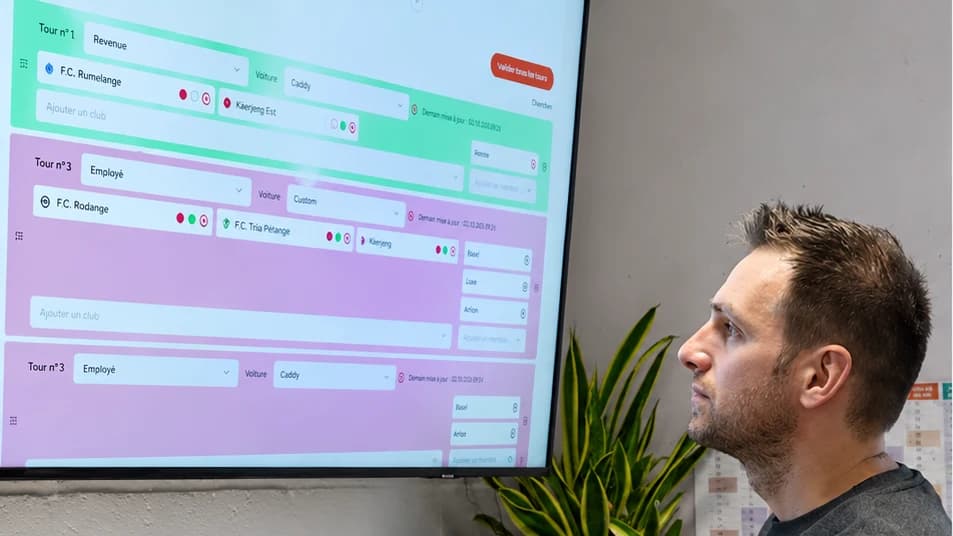
Recurring templates help prepare drivers’ route sheets and planned movements.
Invoicing linked to recorded activity
Processed weights and information needed for monthly invoicing are drawn from workshop scans, reducing duplicate entry.
The round plan displayed in the workshop.
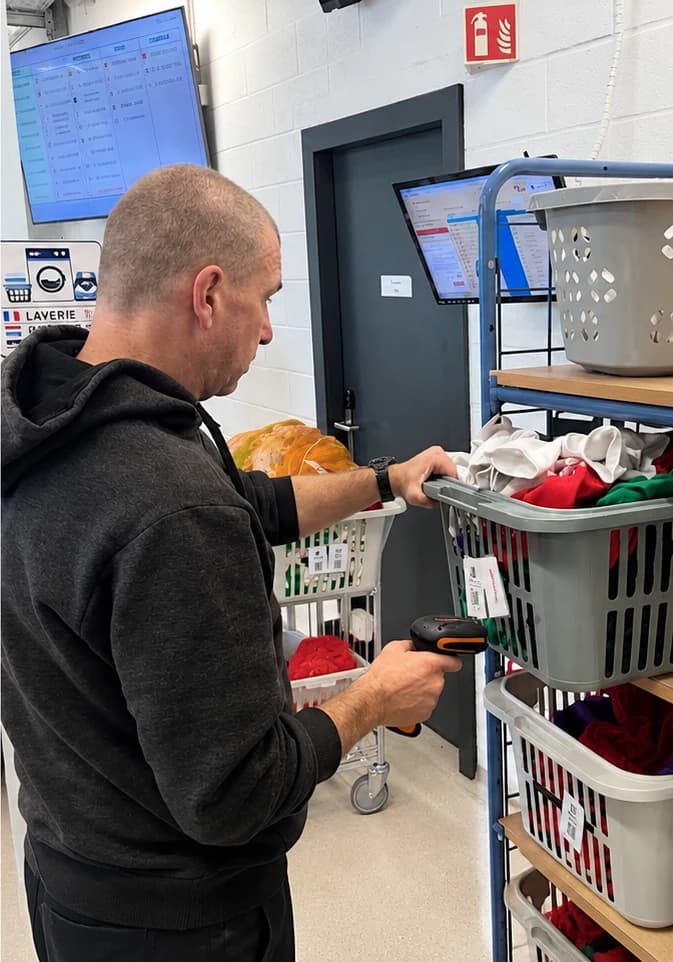
Every basket is scanned on arrival.
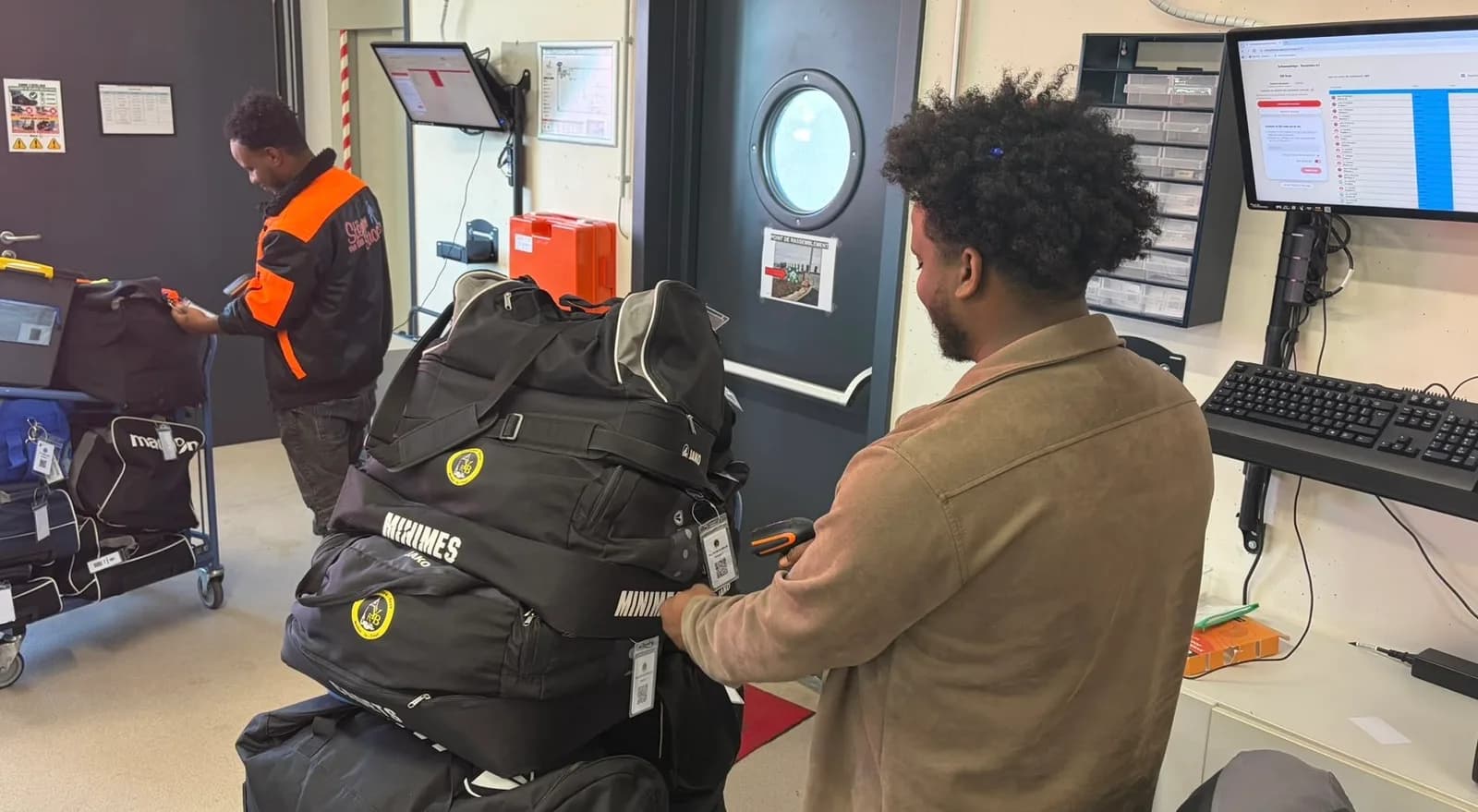
At reception, each bag is identified by its QR code.
What it changes day to day
The shared overview helps the team locate bags, check invoicing and manage activity. It also reduces some spreadsheets and duplicate administrative entry.
Time saved on tracking can be spent on workshop tasks and supporting people.
Interested in this type of project?
Tell us what you need